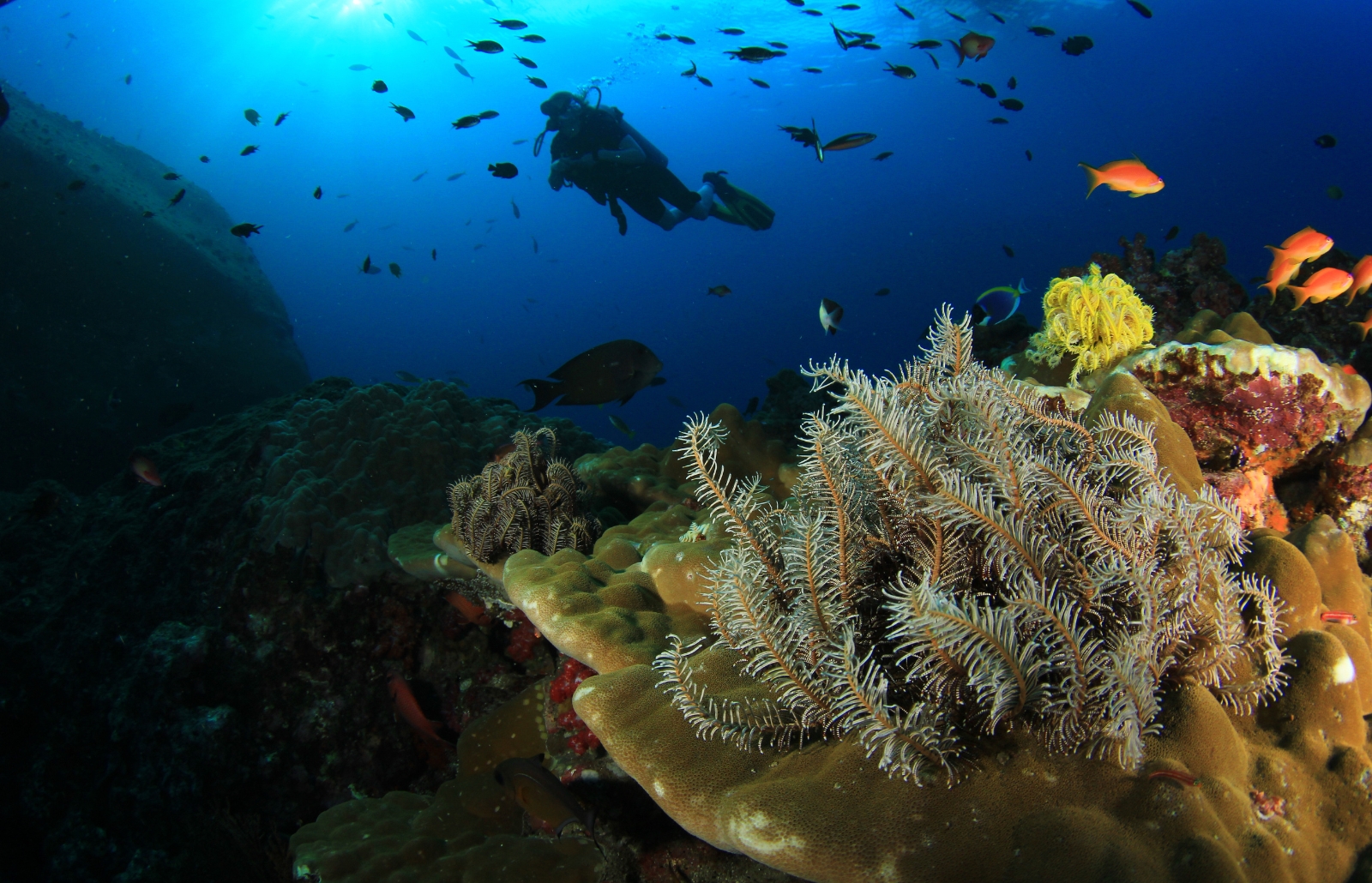
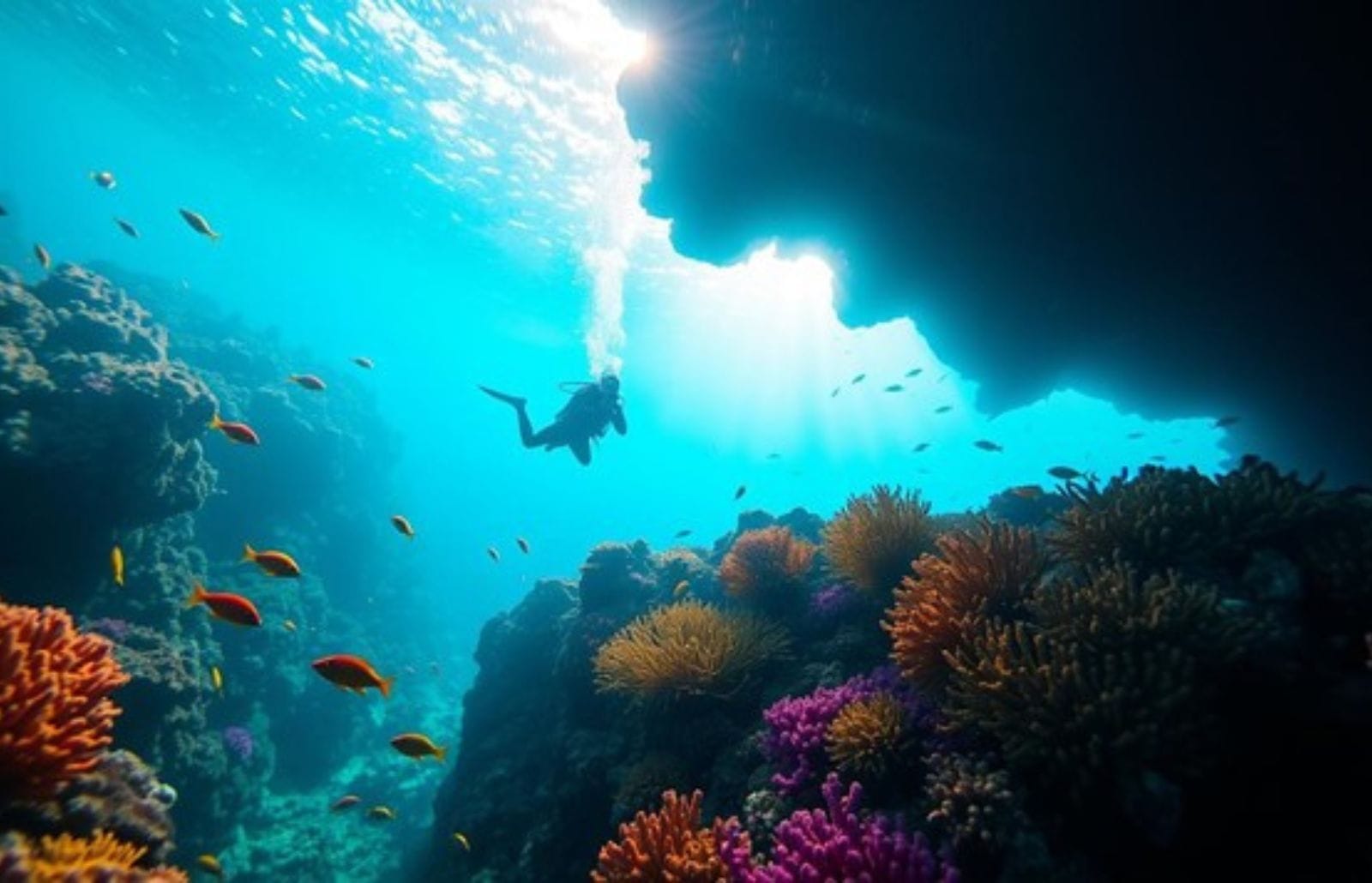
Blue Corner is one of the most famous and most challenging dive sites around Nusa Lembongan, known for its powerful currents, deep reef walls, and exciting encounters with large pelagic marine life. Located on the northwestern side of Nusa Lembongan, the site sits directly in the path of the ocean currents that flow through the Nusa Islands.
Its reputation is built on adrenaline-filled drift dives, dramatic underwater landscapes, and the chance of encountering some of the region’s most impressive ocean predators. During the cooler months, that same combination of depth and cold upwelling also makes Blue Corner one of the sites where divers hope to meet mola mola.
For experienced divers, Blue Corner is often considered one of the most thrilling dive sites in Bali, and during mola mola season it becomes one of the most sought-after.
Why Is Blue Corner Famous?
Blue Corner is famous place that can we see mola mola. Between roughly July and October, cold water rises through the channels of the Nusa Islands and carries ocean sunfish up from the deep to the cleaning stations along the reef edge. Blue Corner’s steep drop-off and its position in the current put it directly on that seasonal route. Meeting a three-meter fish that hangs almost motionless in the blue while small reef fish work across its skin is the encounter that has built the site’s international reputation, and it is the reason divers plan entire trips around a few weeks of the calendar.
The rest of the year, Blue Corner earns its name differently. Its strong currents, deep drop-offs, and open-water action set it apart from the coral gardens and calmer reef dives nearby. Divers come in the hope of seeing reef sharks, eagle rays, giant trevallies, tuna, barracuda, and the huge schools of fish that sweep through the channel.
That combination of demanding conditions and world-class marine life has made Blue Corner one of the most iconic dive sites in the Nusa Islands. For most visiting divers, though, the mola mola is the encounter that puts it on the list in the first place.
Mola Mola: The Icon of Nusa Lembongan
The mola mola is the heaviest bony fish in the world. Adults can reach around three meters from fin tip to fin tip and can weigh more than a tonne. The body looks as though it has been cut in half: it is flattened, disc-shaped, and it ends abruptly where a tail would normally be, in a rudder-like structure called a clavus. The fish moves by sculling its long dorsal and anal fins from side to side, which gives it a slow, hovering, almost hypnotic way of swimming.
It is worth noting that the sunfish most commonly seen around Bali is now generally identified as Mola alexandrini, the southern or bump-head sunfish, rather than the true Mola mola. Locally, and throughout the diving world, the name “mola mola” has stuck, and it is the term almost every diver and dive center uses.
What Is the Underwater Topography Like?
Blue Corner features a dramatic multilevel drop-off that descends from approximately 20 meters to depths beyond 45 meters.
The reef transitions from sloping formations into deeper walls and open-water channels, where pelagic species are frequently encountered. The deeper terrain creates an exciting underwater landscape that differs significantly from the shallow reef plateaus found at many nearby dive sites.
This depth profile matters for mola mola encounters. Ocean sunfish spend most of their lives in cold, deep water, so sites with quick access to depth give divers a far better chance of seeing one than shallow reef dives do. At Blue Corner, the drop into mola mola territory happens within minutes of descending.
Much of the dive takes place along the reef edges, where the currents interact with the underwater topography.
How Strong Are the Currents at Blue Corner?
The currents at Blue Corner can range from relatively mild to extremely powerful.
Conditions may include:
- Low current
- Moderate drift conditions
- Strong drift diving conditions
- Very powerful current flow
The direction and the intensity of the current are influenced by the tides, by ocean movement, and by seasonal conditions. Because conditions can change quickly, dive plans are carefully adapted by local dive professionals.
The currents are one of the site’s defining characteristics, and they are a major reason why experienced divers enjoy the challenge. They also play a direct role in mola mola encounters, since the cold upwelling that carries the fish upward is driven by the same water movement. Holding a stable position in current while a mola mola is being cleaned is one of the harder skills the site asks of a diver.
Is Blue Corner a Drift Dive?
Current-assisted diving allows divers to cover large sections of the reef while they observe the marine life and the underwater terrain. Depending on conditions, the drift can range from relaxed movement to fast-paced action through the reef channels.
During mola mola season the profile of the dive often changes slightly. Rather than drifting continuously, groups may pause near a cleaning station and hold position quietly to watch, before rejoining the current. Your guide will brief you on the plan for the day based on the conditions and on where the molas have been seen recently.
Is Blue Corner Safe for Diving?
Blue Corner can be a safe dive site when explored by appropriately trained and experienced divers.
Because of the site’s depth and current conditions, divers should be comfortable with drift diving techniques and advanced buoyancy control. Careful dive planning and local knowledge play an important role in managing changing conditions.
The site is generally recommended for divers who already have experience in current-driven environments.
Is Blue Corner Suitable for Beginner Divers?
The combination of strong currents, deep water, and changing ocean conditions can be challenging for less experienced divers. Most beginners are better suited to the calmer reef sites around Nusa Lembongan and Nusa Penida before they progress to more advanced dives.
Newly certified divers who are hoping to see a mola mola are not out of luck, however. Other sites in the Nusa Islands offer sightings at shallower depths and in gentler conditions, and a local dive center can advise on which of them suits your certification level during the season.
Is Blue Corner Good for Experienced Divers?
Blue Corner is considered to be one of the best dive sites in Bali for experienced divers.
Advanced divers are drawn to the site because of its challenging conditions, its pelagic marine life, and its exciting drift diving opportunities. The unpredictability of the site means that every dive can offer a completely different experience.
For many, the peak of that experience arrives in the cooler months, when a demanding drift dive can turn into a quiet, motionless few minutes beside a mola mola.
What Marine Life Can You See at Blue Corner?
Blue Corner is known for its large marine life and its open-water encounters.
Common sightings include:
- Reef sharks
- Eagle rays
- Giant trevallies
- Barracuda
- Tuna
- Schools of jacks
During the appropriate season, divers may also encounter the mola mola, which is the sighting that many divers travel to the Nusa Islands specifically to experience.
The site’s nutrient-rich currents help to support the larger predators and the schooling fish that thrive in active ocean environments, and the same nutrient flow underpins the cleaning stations that attract mola mola.
What to Expect From the Water
The same upwelling that brings the molas up makes the diving noticeably colder. Temperatures at depth can drop sharply, and divers frequently pass through a distinct thermocline on the way down. A 5 mm wetsuit is a sensible minimum during the season, and many divers add a hood or a vest.
The cold water also affects your air consumption and your comfort, so plan conservatively. Combined with Blue Corner’s depth and currents, mola mola season is demanding diving, and it rewards divers who are properly equipped and properly experienced.
How Deep Is Blue Corner?
Blue Corner begins at approximately 20 meters and descends beyond 45 meters.
Maximum depths can exceed 50 meters in some areas, although recreational dives typically remain within planned depth limits that are based on certification level and dive objectives.
The site’s depth profile is another reason why it is generally recommended for experienced divers, and it is also part of what makes mola mola encounters possible here. Most sightings occur in the deeper part of the recreational range, which is one reason why an Advanced certification is a practical minimum for the site during the season.
What Is the Visibility Like at Blue Corner?
Visibility at Blue Corner is often excellent.
Clear water frequently provides impressive views out into the blue, which allows divers to spot schooling fish and larger marine life from a distance. This matters during mola mola season, since molas are often first seen as a pale shape hanging in the open water some way off the reef.
Visibility may occasionally drop depending on tidal movement and ocean conditions, but even when it decreases slightly, the marine life encounters often remain exceptional.
What Are the Water Temperatures at Blue Corner?
Water temperatures typically range from 16°C to 28°C, with an average of approximately 24°C.
The lower end of that range is not unusual during mola mola season, when seasonal upwellings bring significantly cooler water to the site. That cold is not an inconvenience to be tolerated but the very condition that makes the encounter possible, so divers should be prepared for these variations throughout the year and should bring appropriate exposure protection if they are diving between July and October.
What Makes Blue Corner Different From Other Nusa Lembongan Dive Sites?
Blue Corner stands out because of its combination of powerful currents, deep-water terrain, and pelagic marine life.
While nearby sites often focus on coral gardens, manta rays, or relaxed drift dives, Blue Corner is built around adventure and open-ocean encounters. Divers visit for the excitement of the unpredictable conditions and for the chance of seeing larger marine species, including the seasonal mola mola.
Few sites in the Nusa Islands combine adrenaline diving and a genuine mola mola opportunity in the same dive, and that pairing is what makes Blue Corner distinctive.
Its reputation as one of Bali’s most challenging dive sites makes it unique within the Nusa Islands.
Is Blue Corner Worth Diving?
For experienced divers, Blue Corner is often considered to be one of the most rewarding dive sites in Bali.
The site’s combination of challenging conditions, deep reef structures, and opportunities for pelagic encounters creates an unforgettable underwater experience. Every dive feels different, and the possibility of encountering sharks, eagle rays, tuna, barracuda, or a mola mola keeps divers returning year after year.
Ask most divers what stays with them afterwards and the answer is usually the same: the moment a mola mola drifted up out of the blue.
For those who are seeking excitement and adventure beneath the surface, Blue Corner is a true bucket-list dive.
Learn More About Blue Corner
Conclusion
Blue Corner is one of the most thrilling dive sites in the Nusa Penida Marine Protected Area, and it offers challenging currents, dramatic underwater terrain, and exceptional opportunities to encounter large pelagic marine life. Its reputation among experienced divers has made it one of the most iconic dives in the Nusa Islands.
For many divers, though, the real draw arrives with the cold water. Between July and October, the seasonal upwelling brings mola mola up from the deep, and the chance to hover quietly beside the heaviest bony fish in the ocean is an experience that few other destinations in the world can offer.
Whether you would like to drift alongside schools of jacks, spot reef sharks in the blue, or wait patiently at a cleaning station for a mola mola to appear, diving Blue Corner with Legend Diving offers an unforgettable adventure in one of Bali’s most exciting underwater environments.
Blue Corner is one of the most famous and most challenging dive sites around Nusa Lembongan, known for its powerful currents, deep reef walls, and exciting encounters with large pelagic marine life. Located on the northwestern side of Nusa Lembongan, the site sits directly in the path of the ocean currents that flow through the Nusa Islands.
Its reputation is built on adrenaline-filled drift dives, dramatic underwater landscapes, and the chance of encountering some of the region’s most impressive ocean predators. During the cooler months, that same combination of depth and cold upwelling also makes Blue Corner one of the sites where divers hope to meet mola mola.
For experienced divers, Blue Corner is often considered one of the most thrilling dive sites in Bali, and during mola mola season it becomes one of the most sought-after.
Why Is Blue Corner Famous?
Blue Corner is famous place that can we see mola mola. Between roughly July and October, cold water rises through the channels of the Nusa Islands and carries ocean sunfish up from the deep to the cleaning stations along the reef edge. Blue Corner’s steep drop-off and its position in the current put it directly on that seasonal route. Meeting a three-meter fish that hangs almost motionless in the blue while small reef fish work across its skin is the encounter that has built the site’s international reputation, and it is the reason divers plan entire trips around a few weeks of the calendar.
The rest of the year, Blue Corner earns its name differently. Its strong currents, deep drop-offs, and open-water action set it apart from the coral gardens and calmer reef dives nearby. Divers come in the hope of seeing reef sharks, eagle rays, giant trevallies, tuna, barracuda, and the huge schools of fish that sweep through the channel.
That combination of demanding conditions and world-class marine life has made Blue Corner one of the most iconic dive sites in the Nusa Islands. For most visiting divers, though, the mola mola is the encounter that puts it on the list in the first place.
Mola Mola: The Icon of Nusa Lembongan
The mola mola is the heaviest bony fish in the world. Adults can reach around three meters from fin tip to fin tip and can weigh more than a tonne. The body looks as though it has been cut in half: it is flattened, disc-shaped, and it ends abruptly where a tail would normally be, in a rudder-like structure called a clavus. The fish moves by sculling its long dorsal and anal fins from side to side, which gives it a slow, hovering, almost hypnotic way of swimming.
It is worth noting that the sunfish most commonly seen around Bali is now generally identified as Mola alexandrini, the southern or bump-head sunfish, rather than the true Mola mola. Locally, and throughout the diving world, the name “mola mola” has stuck, and it is the term almost every diver and dive center uses.
What Is the Underwater Topography Like?
Blue Corner features a dramatic multilevel drop-off that descends from approximately 20 meters to depths beyond 45 meters.
The reef transitions from sloping formations into deeper walls and open-water channels, where pelagic species are frequently encountered. The deeper terrain creates an exciting underwater landscape that differs significantly from the shallow reef plateaus found at many nearby dive sites.
This depth profile matters for mola mola encounters. Ocean sunfish spend most of their lives in cold, deep water, so sites with quick access to depth give divers a far better chance of seeing one than shallow reef dives do. At Blue Corner, the drop into mola mola territory happens within minutes of descending.
Much of the dive takes place along the reef edges, where the currents interact with the underwater topography.
How Strong Are the Currents at Blue Corner?
The currents at Blue Corner can range from relatively mild to extremely powerful.
Conditions may include:
- Low current
- Moderate drift conditions
- Strong drift diving conditions
- Very powerful current flow
The direction and the intensity of the current are influenced by the tides, by ocean movement, and by seasonal conditions. Because conditions can change quickly, dive plans are carefully adapted by local dive professionals.
The currents are one of the site’s defining characteristics, and they are a major reason why experienced divers enjoy the challenge. They also play a direct role in mola mola encounters, since the cold upwelling that carries the fish upward is driven by the same water movement. Holding a stable position in current while a mola mola is being cleaned is one of the harder skills the site asks of a diver.
Is Blue Corner a Drift Dive?
Current-assisted diving allows divers to cover large sections of the reef while they observe the marine life and the underwater terrain. Depending on conditions, the drift can range from relaxed movement to fast-paced action through the reef channels.
During mola mola season the profile of the dive often changes slightly. Rather than drifting continuously, groups may pause near a cleaning station and hold position quietly to watch, before rejoining the current. Your guide will brief you on the plan for the day based on the conditions and on where the molas have been seen recently.
Is Blue Corner Safe for Diving?
Because of the site’s depth and current conditions, divers should be comfortable with drift diving techniques and with advanced buoyancy control. Careful dive planning and local knowledge play an important role in managing the changing conditions.
Mola mola season adds two further considerations: colder water and the temptation to go deeper than planned in pursuit of a sighting. Experienced guides will keep the group within its limits, and no encounter is worth exceeding your training or your gas plan.
Is Blue Corner Suitable for Beginner Divers?
The combination of strong currents, deep water, and changing ocean conditions can be challenging for less experienced divers. Most beginners are better suited to the calmer reef sites around Nusa Lembongan and Nusa Penida before they progress to more advanced dives.
Newly certified divers who are hoping to see a mola mola are not out of luck, however. Other sites in the Nusa Islands offer sightings at shallower depths and in gentler conditions, and a local dive center can advise on which of them suits your certification level during the season.
Is Blue Corner Good for Experienced Divers?
Blue Corner is considered to be one of the best dive sites in Bali for experienced divers.
Advanced divers are drawn to the site because of its challenging conditions, its pelagic marine life, and its exciting drift diving opportunities. The unpredictability of the site means that every dive can offer a completely different experience.
For many, the peak of that experience arrives in the cooler months, when a demanding drift dive can turn into a quiet, motionless few minutes beside a mola mola.
What Marine Life Can You See at Blue Corner?
Blue Corner is known for its large marine life and its open-water encounters.
Common sightings include:
- Reef sharks
- Eagle rays
- Giant trevallies
- Barracuda
- Tuna
- Schools of jacks
During the appropriate season, divers may also encounter the mola mola, which is the sighting that many divers travel to the Nusa Islands specifically to experience.
The site’s nutrient-rich currents help to support the larger predators and the schooling fish that thrive in active ocean environments, and the same nutrient flow underpins the cleaning stations that attract mola mola.
What to Expect From the Water
The same upwelling that brings the molas up makes the diving noticeably colder. Temperatures at depth can drop sharply, and divers frequently pass through a distinct thermocline on the way down. A 5 mm wetsuit is a sensible minimum during the season, and many divers add a hood or a vest.
The cold water also affects your air consumption and your comfort, so plan conservatively. Combined with Blue Corner’s depth and currents, mola mola season is demanding diving, and it rewards divers who are properly equipped and properly experienced.
How Deep Is Blue Corner?
Blue Corner begins at approximately 20 meters and descends beyond 45 meters.
Maximum depths can exceed 50 meters in some areas, although recreational dives typically remain within planned depth limits that are based on certification level and dive objectives.
The site’s depth profile is another reason why it is generally recommended for experienced divers, and it is also part of what makes mola mola encounters possible here. Most sightings occur in the deeper part of the recreational range, which is one reason why an Advanced certification is a practical minimum for the site during the season.
What Is the Visibility Like at Blue Corner?
Visibility at Blue Corner is often excellent.
Clear water frequently provides impressive views out into the blue, which allows divers to spot schooling fish and larger marine life from a distance. This matters during mola mola season, since molas are often first seen as a pale shape hanging in the open water some way off the reef.
Visibility may occasionally drop depending on tidal movement and ocean conditions, but even when it decreases slightly, the marine life encounters often remain exceptional.
What Are the Water Temperatures at Blue Corner?
Water temperatures typically range from 16°C to 28°C, with an average of approximately 24°C.
The lower end of that range is not unusual during mola mola season, when seasonal upwellings bring significantly cooler water to the site. That cold is not an inconvenience to be tolerated but the very condition that makes the encounter possible, so divers should be prepared for these variations throughout the year and should bring appropriate exposure protection if they are diving between July and October.
What Makes Blue Corner Different From Other Nusa Lembongan Dive Sites?
Blue Corner stands out because of its combination of powerful currents, deep-water terrain, and pelagic marine life.
While nearby sites often focus on coral gardens, manta rays, or relaxed drift dives, Blue Corner is built around adventure and open-ocean encounters. Divers visit for the excitement of the unpredictable conditions and for the chance of seeing larger marine species, including the seasonal mola mola.
Few sites in the Nusa Islands combine adrenaline diving and a genuine mola mola opportunity in the same dive, and that pairing is what makes Blue Corner distinctive.
Its reputation as one of Bali’s most challenging dive sites makes it unique within the Nusa Islands.
Is Blue Corner Worth Diving?
For experienced divers, Blue Corner is often considered to be one of the most rewarding dive sites in Bali.
The site’s combination of challenging conditions, deep reef structures, and opportunities for pelagic encounters creates an unforgettable underwater experience. Every dive feels different, and the possibility of encountering sharks, eagle rays, tuna, barracuda, or a mola mola keeps divers returning year after year.
Ask most divers what stays with them afterwards and the answer is usually the same: the moment a mola mola drifted up out of the blue.
For those who are seeking excitement and adventure beneath the surface, Blue Corner is a true bucket-list dive.
Learn More About Blue Corner
Conclusion
Blue Corner is one of the most thrilling dive sites in the Nusa Penida Marine Protected Area, and it offers challenging currents, dramatic underwater terrain, and exceptional opportunities to encounter large pelagic marine life. Its reputation among experienced divers has made it one of the most iconic dives in the Nusa Islands.
For many divers, though, the real draw arrives with the cold water. Between July and October, the seasonal upwelling brings mola mola up from the deep, and the chance to hover quietly beside the heaviest bony fish in the ocean is an experience that few other destinations in the world can offer.
Whether you would like to drift alongside schools of jacks, spot reef sharks in the blue, or wait patiently at a cleaning station for a mola mola to appear, diving Blue Corner with Legend Diving offers an unforgettable adventure in one of Bali’s most exciting underwater environments.

Join our mailing list today
Join our community! Subscribe to our blog for fresh content delivered straight to your inbox
Be part of our community and stay updated with the latest insights! Subscribe to our blog for fresh news, tips, and insights delivered straight to your inbox. Join us on our journey and be the first to know about our updates, events, and special offers. Don't miss out!
Join our mailing list today
Join our community! Subscribe to our blog for fresh content delivered straight to your inbox
Be part of our community and stay updated with the latest insights! Subscribe to our blog for fresh news, tips, and insights delivered straight to your inbox. Join us on our journey and be the first to know about our updates, events, and special offers. Don't miss out!